Key Points:
- Empty hyperrealism doesn't sell; spatial narrative and context do.
- A "Document of Intent" is worth more than hundreds of "silent photos."
- Discover the 5 pillars of the Sitio Estudio Method to transform generic shots into profitable visual essays.
If you are an architect or space photographer, your portfolio is very likely suffering from the "cold render" epidemic: images that are hyperrealistic and technically perfect, but empty of life, failing to convey the essence of the project.
After more than 15 years documenting architectural photography in Colombia and refining the Sitio Estudio Method, I have proven that visual success doesn't depend solely on the camera, but on knowing how to interpret the environment before even turning it on.
In a world oversaturated with images increasingly altered by artificial intelligence, the real truth of projects becomes more important. Patina, wear, and even imperfection are things we must start viewing as virtues rather than defects, because this is precisely what anchors an architectural project to the reality of the place.
The biggest mistake in the industry is treating architectural photography as a purely cosmetic exercise. To truly stand out in a saturated market, you must leave behind "silent photos" and start building a Document of Intent that reveals the truth of the place, honors the designer's geometry, and captures the patina of time in the materials.
In this article, I will reveal the pillars of our methodology so you can learn to transform your generic shots into coherent and profitable visual essays, laying the foundation for the professional transformation we will master in our upcoming training courses.
The problem of cosmetic photography and the "cold render"
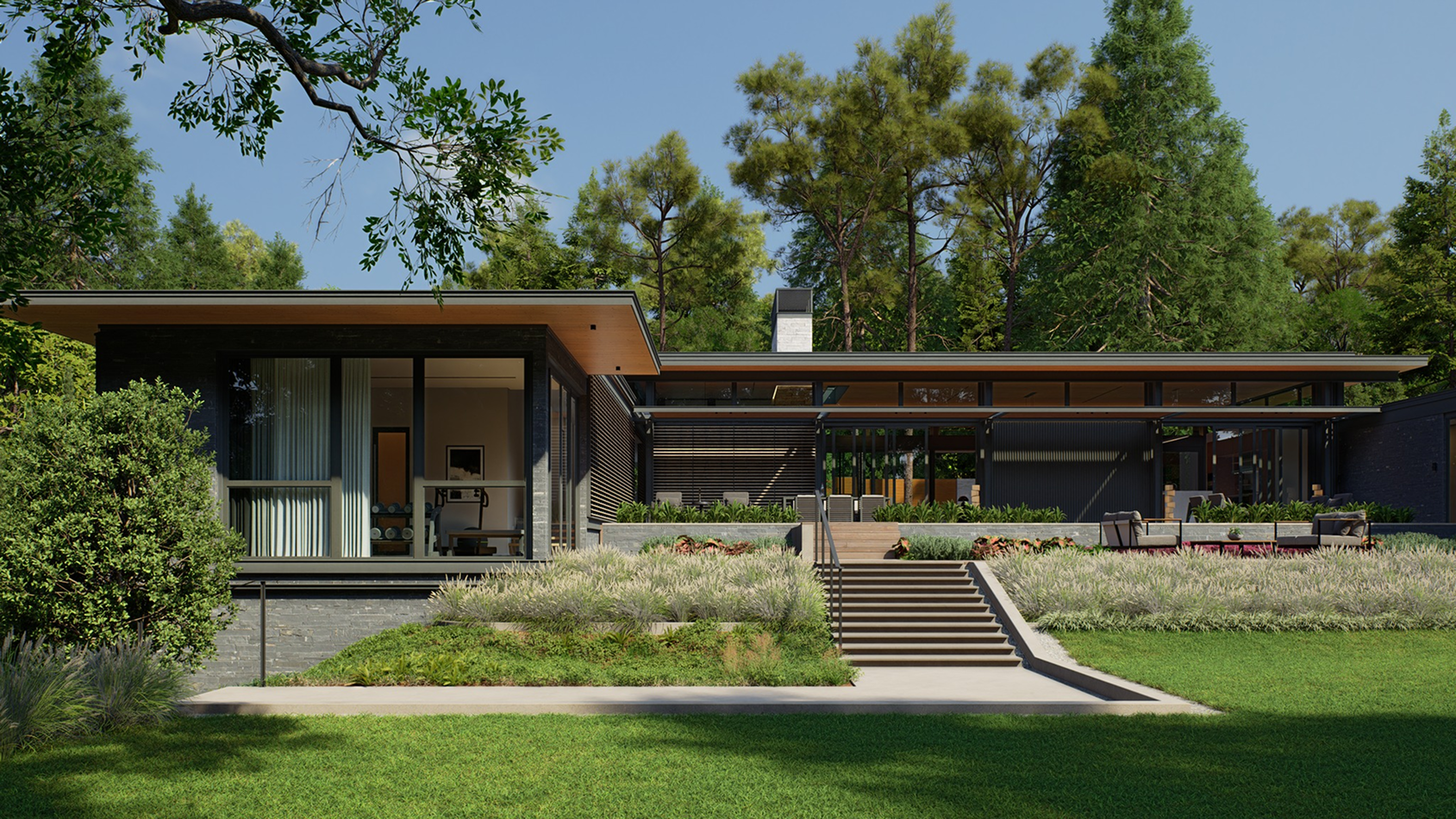
Above: A cold render. Dead, sterile visual information without life.
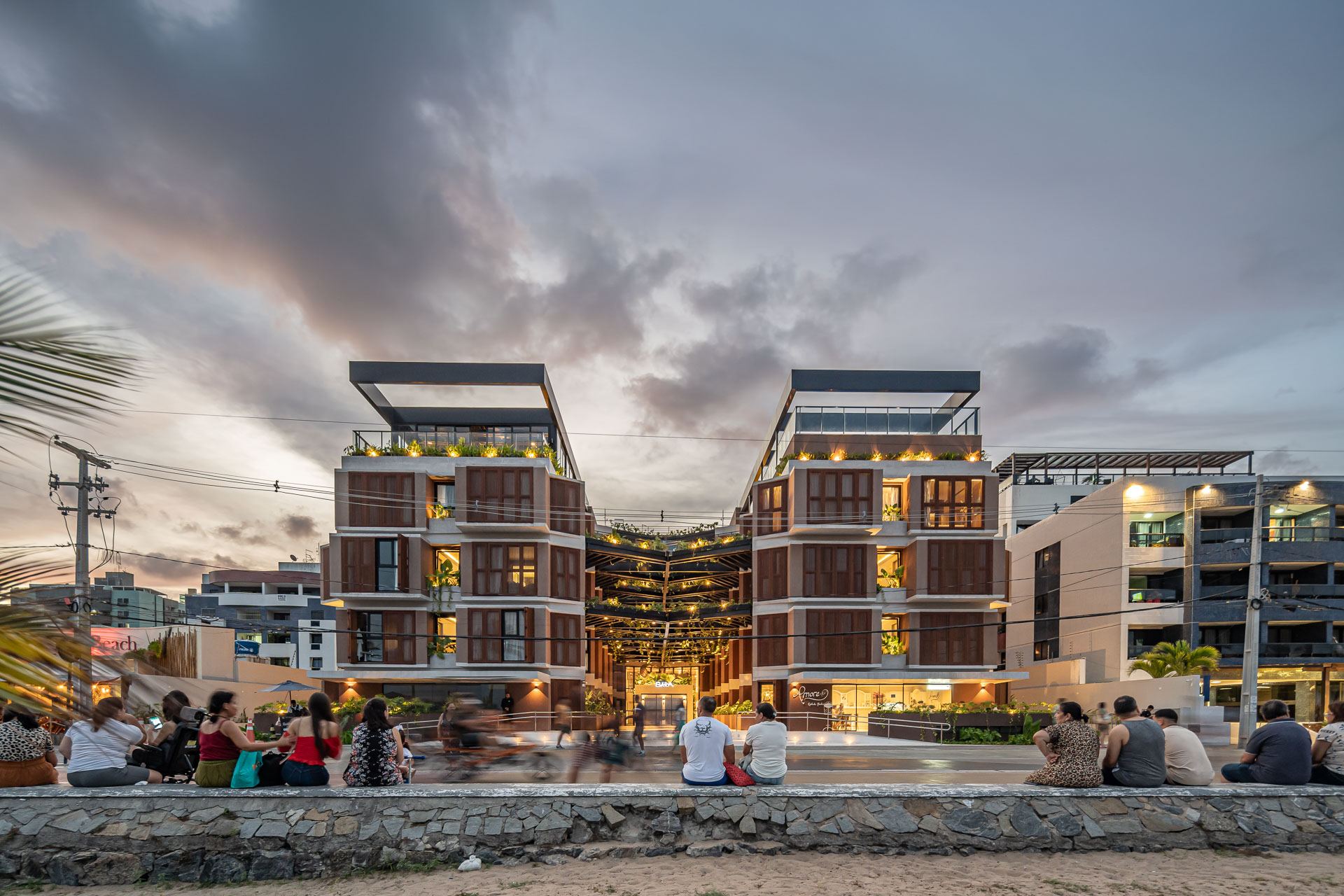
Below: Real photography of Hotel Bará (PlanB arquitectos, Brazil). A living narrative of the space, where sunlight and context are protagonists.
The industry has become obsessed with sterile images. We look for perfect skies, remove any imperfections in post-production, and empty spaces of any trace of human occupation. The result is photos that look like they came out of a rendering engine from a decade ago.
But a living building is not perfect. Documenting the "truth of the place" implies stepping away from this cosmetic photography. At the end of the day, good architecture is the result of a deep analysis of the place: its climate, its social dynamics, and its topography. Good architectural photography must integrate and understand these concepts to properly approach a photographic assignment.
Selling a transformation, not just images
The goal of a professional photographer is not to sell "visual information" (loose photos charged per unit), but to offer clients—architects, builders, developers—a transformation. Your job is to take their project from point A (a finished but uncommunicated work) to point B (an impactful work, ready to be published and awarded) through a Document of Intent.
Pro Tip: Do you want to learn how to structure this Document of Intent for your own clients and multiply the value of your quotes? [Join the waitlist for our intensive program here].
5 steps to master architectural visual narrative (The Sitio Estudio Method)
1. The Architect's Eye (The Reading)
The best architectural photography is taken long before removing the camera from the backpack. It begins with reading the architectural plans and deeply understanding the original concept. You must unlearn the aesthetic of the "cold render" and ask yourself: What was the architect trying to achieve here? Where are the main axes?
2. The Invisible Technical Language
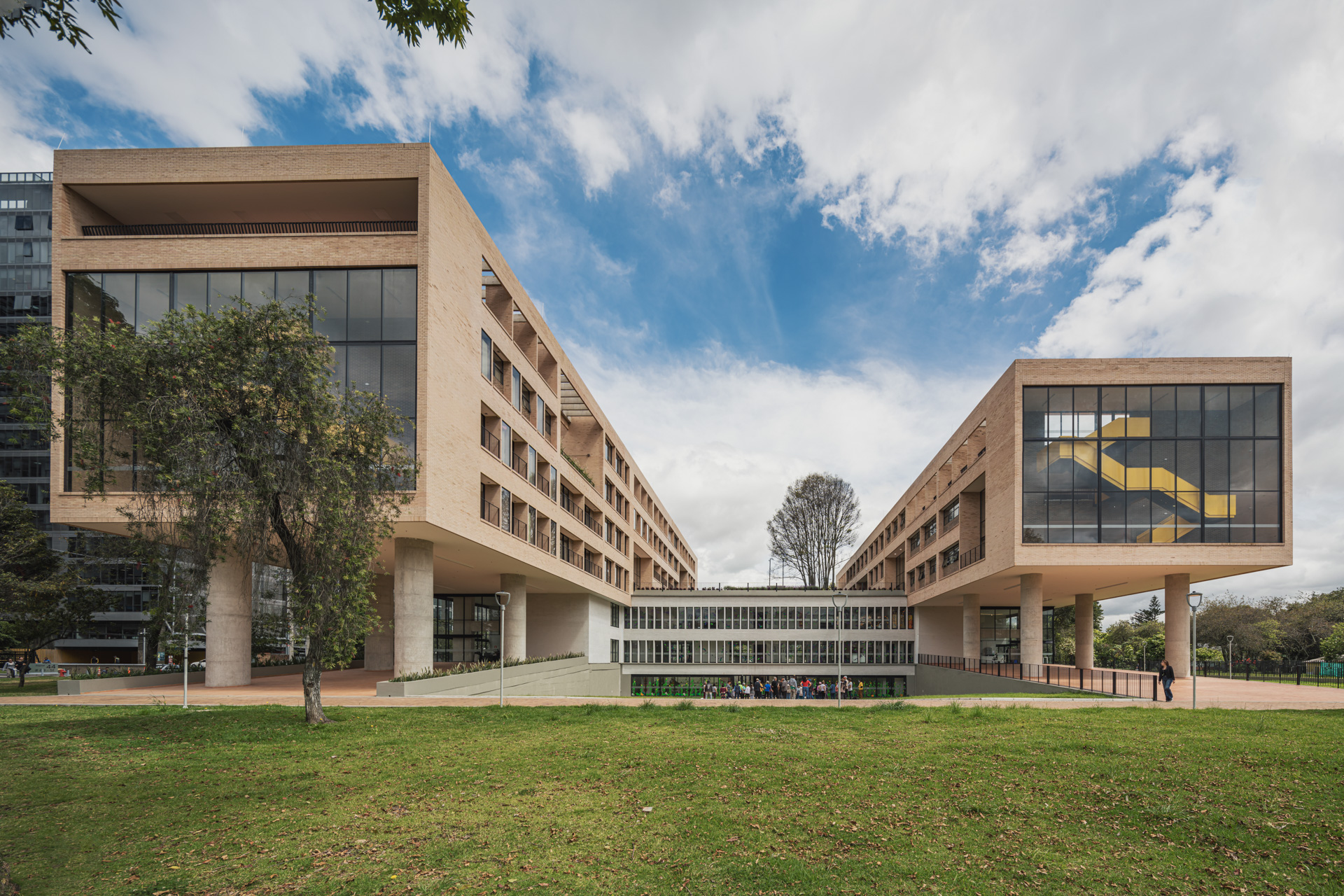
El Camino (FP Arquitectos, Bogotá).
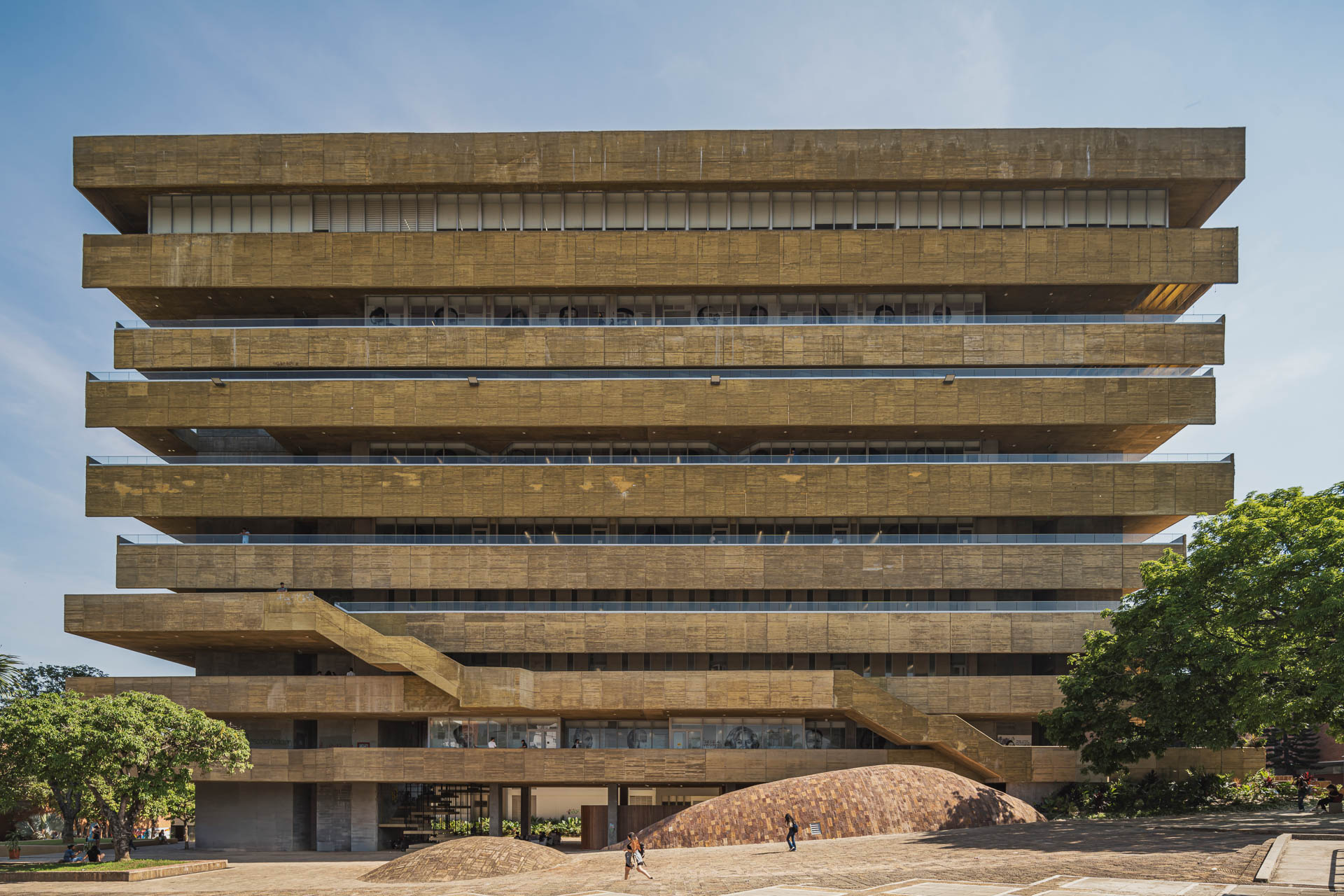
UIS Social Sciences Building (Tab Bonilla, Bucaramanga).
The perspective control (tilt-shift) lens is not a luxury; it is the indispensable tool to respect the designer's geometric intent while maintaining perfect vertical lines.
The camera must subordinate itself to the architectural vision, not the other way around. The use of tilt-shift (perspective-control) lenses and rigorous perspective correction are not a technical whim. They are moral obligations of the photographer to honor the structural intention of the work.
They say the arrow doesn't make the archer... but it certainly helps. Obviously, one can do architectural photography with traditional lenses, but perspective control (tilt-shift) lenses are fundamental to refine the capture. This optic allows you to achieve precise images directly from the camera shot, honoring the geometry without having to alter the photo with additional post-production tricks.
3. Composition and Narrative (The Living Story)
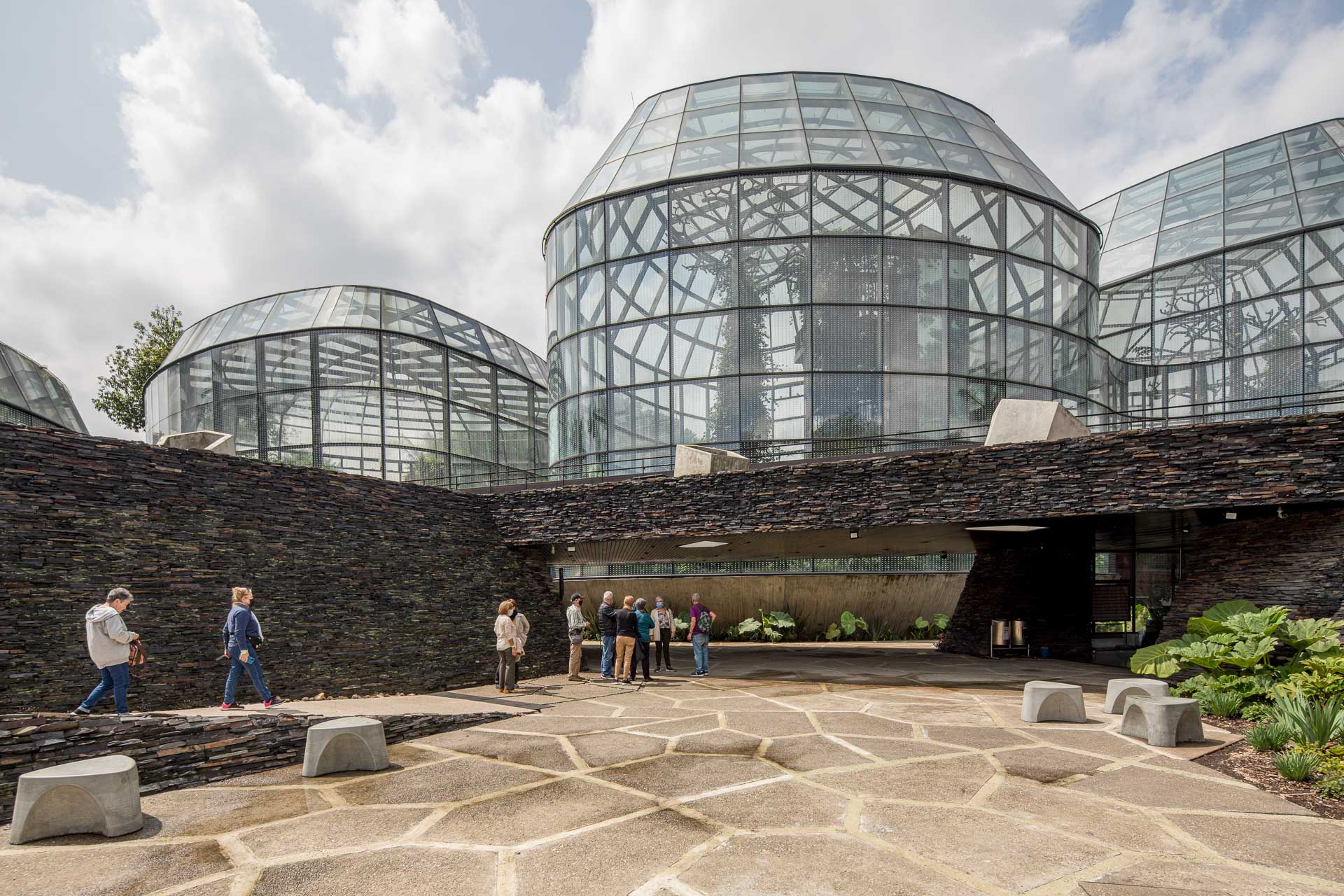
Tropicario (DAARP, Bogotá). Human scale gives true meaning to the monumental proportion of the space.
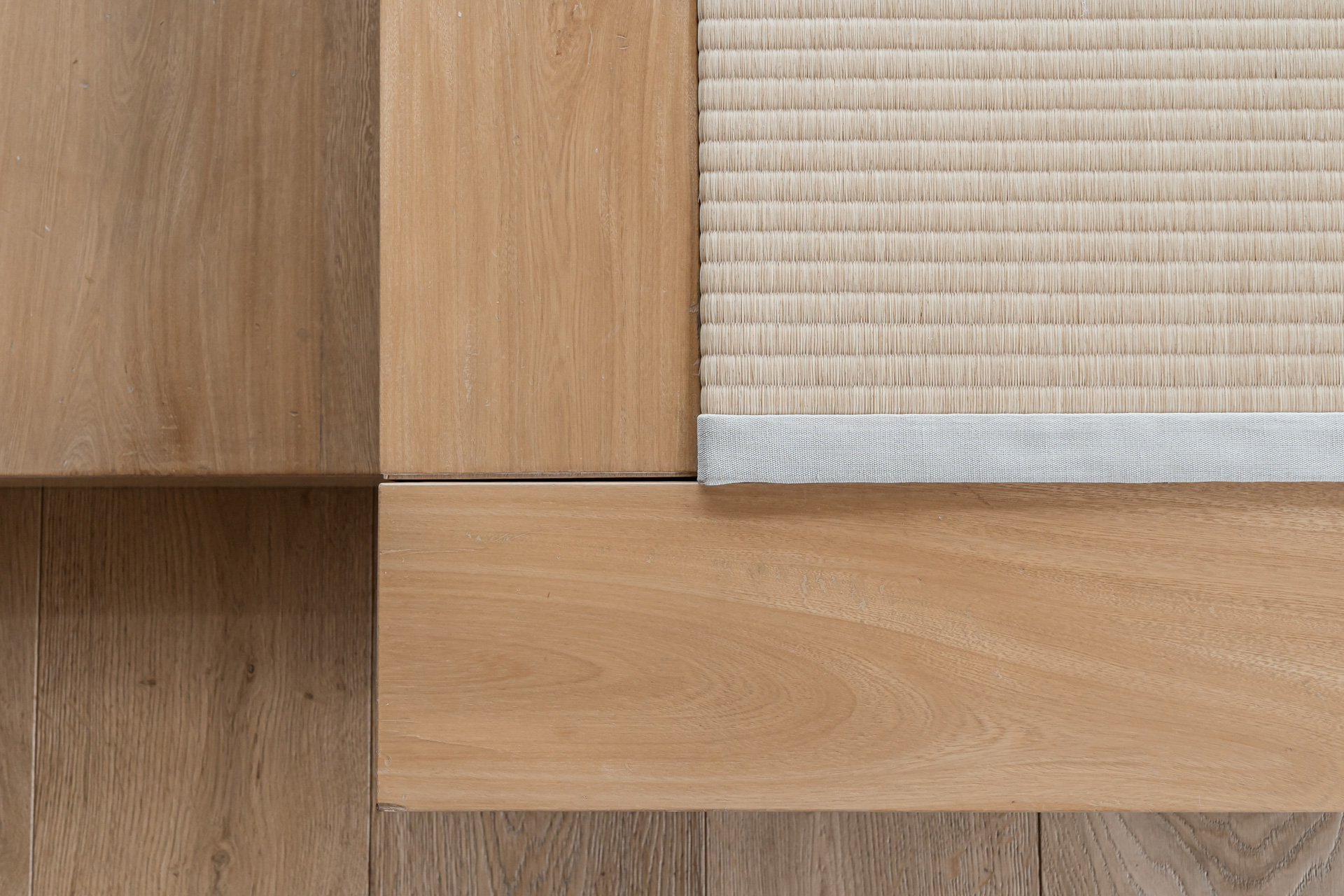
Casa Compostela (Llano Arquitectos, El Retiro). True materiality is the antidote to "dead spaces."
Avoid photographing dead spaces. You must build a coherent visual essay capturing the patina of time, the true materiality, and, crucially, human scale. A person walking out of focus or a projected shadow tells the viewer how that space is lived.
4. Editorial Post-production
Editing should reveal the truth of the material, not falsify it. If a concrete wall has stains from recent rain, that is the building's history.
I was once at a talk with the great landscape photographer José María Mellado, and I took one of his anecdotes as law: one day he was asked to erase a tiny piece of trash from a perfect landscape, and he replied that doing so would remove the human footprint, that that little piece of trash was the difference between a dead photo and a living photo. I firmly believe that elements of photographic reality are what make images come alive and go from being a simple render to a truly real photo.
5. From Photographer to Professional (The Business)
Knowing how to take photos is only 50% of the job. The other 50% is curation and business. Using our Fresh Eyes Matrix, we learn to discard repetitive images and structure a profitable portfolio. This is what allows you to move from "charging per photo" to successful quotes per "visual essay."
Conclusion: Your next step towards professional photography
Mastering these 5 pillars is exactly what separates you from being an amateur who takes "pretty photos" to becoming a creator of highly profitable Documents of Intent. The end of the "cold render" is the beginning of your true career as an architectural photographer.
When you are with your camera facing a project, ask yourself how you can manage to capture the reality, scale, and life of the architecture.
Take the professional leap
Want to leave the 'cold render' behind and master this methodology step-by-step? Join the waitlist for our next intensive training program and transform the way you see and sell architecture.[BUTTON: Join the waitlist]
Author Bio:
Alejandro Arango
With over 15 years of experience documenting the best architecture in Colombia, Alejandro is the founder of Sitio Estudio. His methodological approach helps professionals stop taking photos and start creating visual essays with intent. Connect with him on Instagram and LinkedIn.