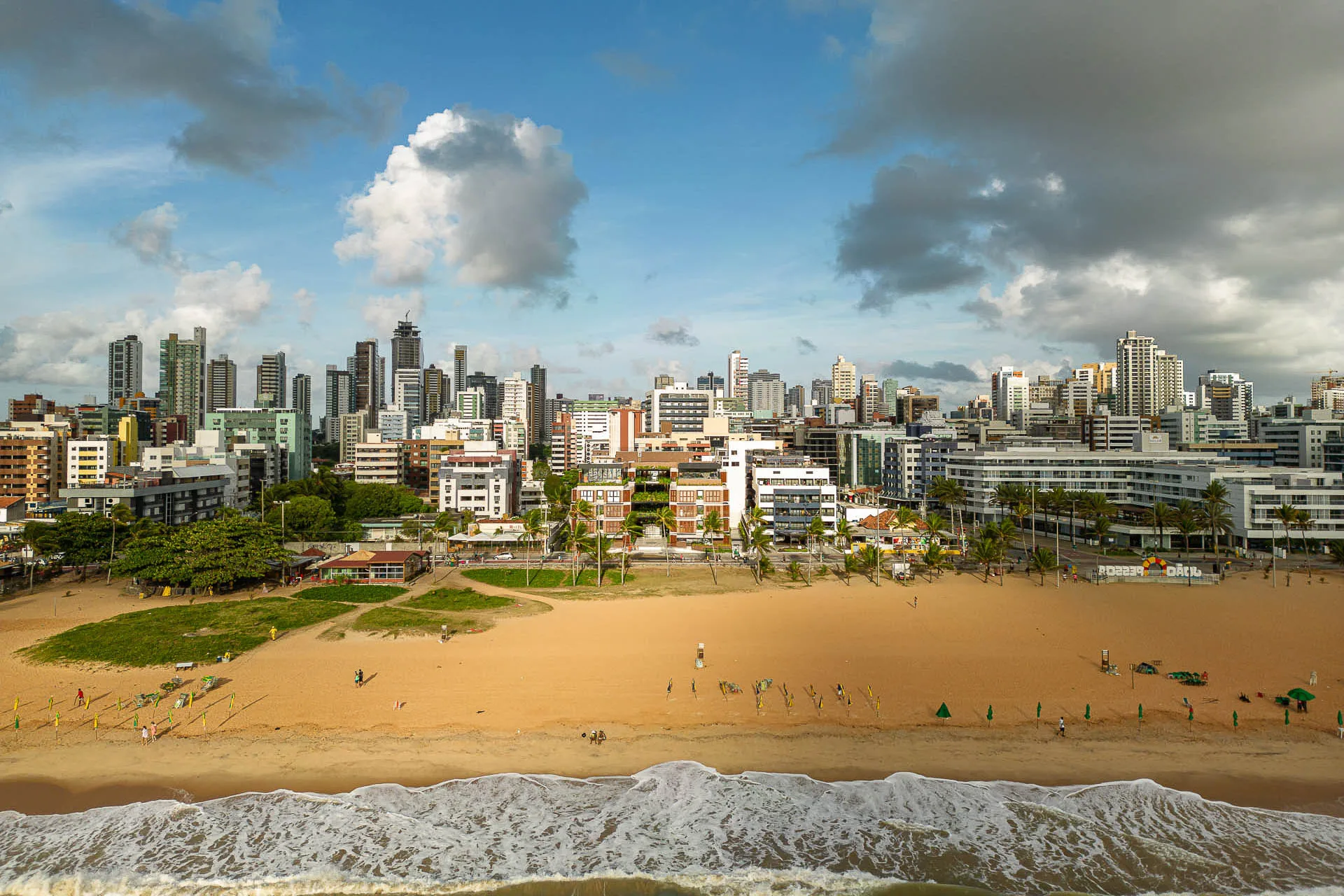
In this article, I share how I approached the documentation of Hotel Bará in João Pessoa, Brazil —designed by PlanB Arquitectos— based on its passive climate regulation concept and how I decided to integrate the extreme coastal light conditions to make them the true protagonists of the space's visual narrative.
- First international project: The application of my visual documentation methodology outside Colombia.
- Bioclimatic rigor: How I photographically translated cross-ventilation and passive solar control systems in an equatorial climate.
- The sea as a material: My decision to compose with the Atlantic Ocean, not as a decorative background but as a structuring element of the hotel.
🏛️ Project Datasheet
- Project: Hotel Bará
- Architects: PlanB Arquitectos (Medellín, Colombia)
- Location: João Pessoa, Paraíba, Brazil
- Completion Year: 2023
- Scope: Architectural Photography + Cinematic Video (Cinema of Spaces)
- Shoot Date: February 2023
Why this project, why now
Hotel Bará has become one of the most significant reference points within my work philosophy. Previously, I cited it as the perfect example of what I aim for with a "Document of Intent," contrasting it directly with the sterility of a "cold render": that geometrically perfect yet atmosphere-free image. However, behind this visual essay lies a travel chronicle and a set of technical decisions that I want to share with you in depth.
Documenting a hotel designed by a Colombian studio in northeastern Brazil was a major milestone in my career. Having previously documented PlanB's projects in Colombia —such as Casa Amaluna in Las Palmas or the 23 Living residential building in Medellín— the firm entrusted me with traveling to João Pessoa to produce the visual documentation for this work, which combines high-end hospitality with a strong commitment to environmental and bioclimatic design.
The Architect's Eye: reading the project before traveling
The first pillar of my method is Reading (Lectura). Before boarding my flight to Brazil, I conversed at length with Felipe and Federico Mesa from PlanB Arquitectos. I carefully studied the architectural drawings and their conceptual renderings to understand the core axis of the project: Hotel Bará is not a hermetic block dependent on central air conditioning; it is an open, permeable building designed to breathe the Atlantic breeze.
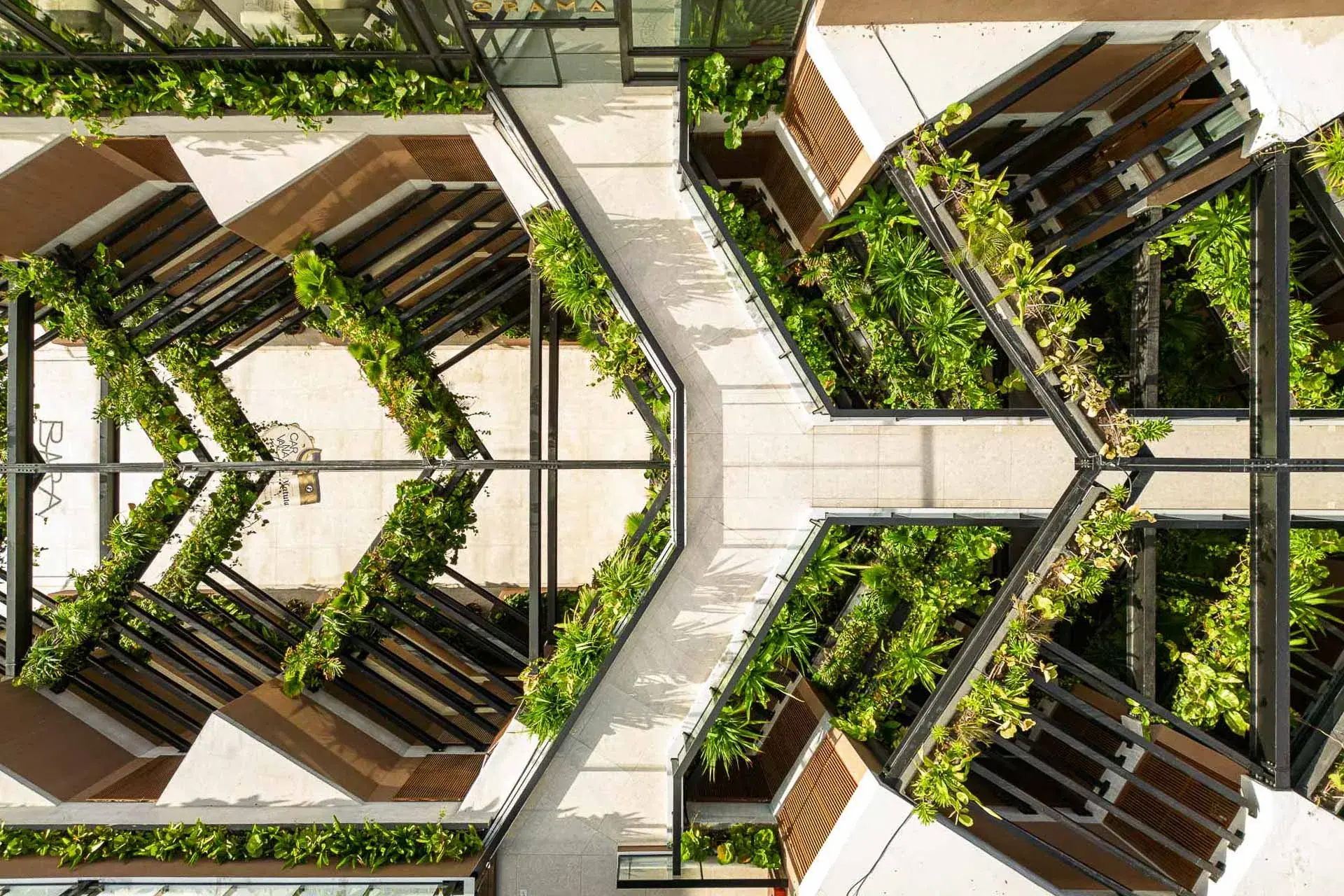
The layout revolves around a high-ceilinged central atrium acting as a thermal lung, flanked by corridors and suspended metal bridges connecting the rooms. Furthermore, the building's volumetry places the rooms at a diagonal angle along the side facades, a technical solution that preserves guest privacy while ensuring views oriented toward the ocean. Understanding this geometric arrangement and the intent behind the project was key for me: the feature could not be limited to pretty pictures of rooms, but had to physically demonstrate the passage of air, the articulation of its volumetry, and the spatial dynamics of its central void.
The technical challenge: tropical coastal light
João Pessoa is located just 7 degrees south of the equator, creating lighting conditions very different from those in cities like Medellín or Bogotá. In this latitude, during February, the sun rises around 4:45 AM and gains elevation quickly. By 9:00 AM, the light becomes intense and vertical, casting short shadows and creating high contrast that reduces the definition of material textures and facade details.
To solve this challenge, I restructured my usual shooting windows:
- My mandatory sunrise: My external work began at 5:00 AM to capture the first side rays before the sun gained too much height.
- The midday break: From 10:30 AM to 2:30 PM, I stopped exterior shooting to focus on interior details and logistical planning for public areas.
- The physical challenge of salinity: On any beach photo shoot, it is essential to constantly clean optics with air blowers and wet wipes, as the sea breeze and salt are continuously affecting the equipment.
> In tropical coastal architectural photography, a circular polarizing filter is indispensable. It does not only serve to saturate the blue of the sky or sea; its primary function is to eliminate the specular reflection of haze and salinity settled on the wooden lattices and damp tropical foliage. This restores the true texture and natural color of the materials.
Composition and narrative: the sea as a fourth material
At Hotel Bará, the Atlantic Ocean is not just a decorative backdrop; it is another building material. Its design directly responds to João Pessoa's urban planning regulations, which dictate a gradual height increase as buildings move further inland from the beach to ensure that all structures retain ocean views. Because of this, beachfront buildings —such as Hotel Bará— cannot exceed 5 stories in height, a rule that defines the building's volumetry and its scale within the city. In this feature, my key compositional decision was to alternate between shots where the architecture frames ocean fragments and shots where the low-rise volume of the hotel integrates with the coastal horizon.
For this feature, I chose to concentrate on three main narrative shots:
1. The bioclimatic facade and lattices (Material detail): I recorded the assembly of the wooden lattices under a raking light at 5:00 AM. The shadow cast by the slats on the glass and exposed concrete reveals the actual scale and operation of the solar control. 2. The entrance lobby and its indoor-outdoor transition: A frame showing the polished concrete and natural wood floors in the lobby, opening in direct perspective toward the pedestrian sidewalk and the marine horizon of João Pessoa. 3. The twilight atmosphere (The blue hour): A crepuscular shot on the rooftop that required a perfect balance between natural sky ambient light and the building's artificial illumination.
Twilight atmosphere: capturing the magic of the blue hour
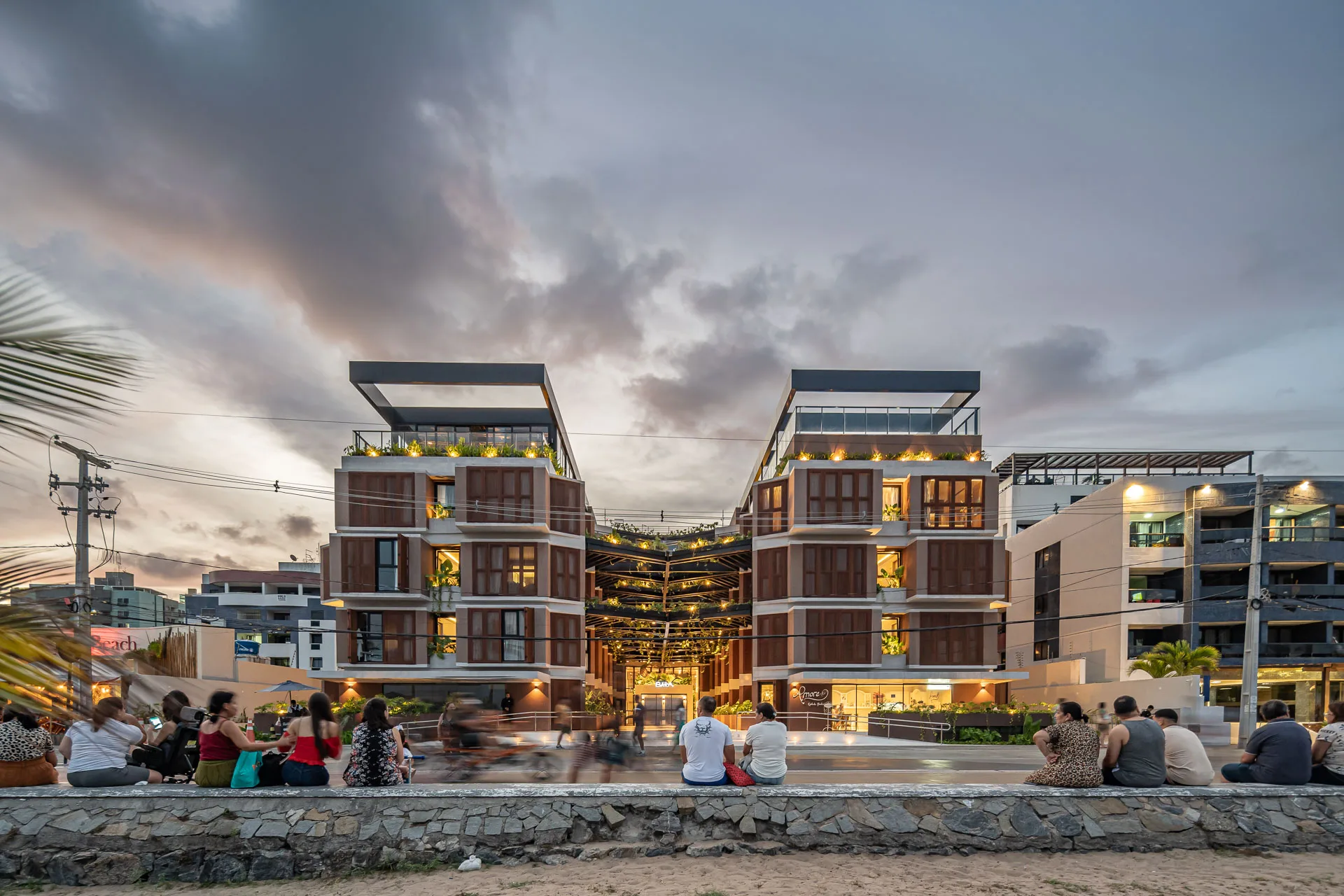
Among the entire documentation, one of the most important and technically complex photographs was the twilight shot. During the blue hour in João Pessoa, the sky assumes a deep cobalt blue hue that contrasts dramatically with the warmth of the hotel's architectural lighting.
Capturing this fleeting moment demands strict timing precision: there is only a 12-to-15-minute window where natural ambient light and the building's artificial illumination reach perfect exposure equilibrium. Using a tripod-mounted bracketing technique and long exposure, I captured how the architecture comes alive facing the sea at nightfall, making this image one of the visual cornerstones of the project.
What this project taught me about documenting outside Colombia
Working internationally taught me that my gear logistics must be minimalist and precise. When flying to another country, you cannot bring three suitcases full of lighting equipment and accessories due to airline weight limits and customs controls.
My work gear was reduced to:
- Two high-resolution camera bodies.
- Three fixed tilt-shift lenses (17mm, 24mm, and 50mm).
- An ultralight but robust carbon fiber tripod to withstand the coastal wind.
- A compact drone under 250 grams to avoid complex import registrations while allowing spectacular aerial views of the urban site placement.
At the management level, my success lay in coordinating directly with the hotel administration. Hospitality photography requires not disturbing guests. Scheduling my shoots in common areas (pool, lobby, restaurant) at specific times and with prior authorization was essential for a smooth and respectful workflow.
Conclusion
Hotel Bará ended up becoming a cornerstone of my portfolio for Sitio Estudio and the ideal case study to explain my concept of a Document of Intent. Instead of forcing an unrealistic sky or altering the wood textures to make it look like a polished render, I preferred to let the Brazilian coastal light, with its real harshness and shadows, narrate the project exactly as it breathes and ages in João Pessoa.